No. 05 · Software · Build ·Started
The Workshop Atlas
Designing a project journal that feels like a place. Why this site is a star chart and not a blog.
The brief was a single sentence with a lot of weight on it: visitors should feel they’re entering a place, not reading a blog. This dossier is the record of how that turned into a star chart.
Three ways in
We sketched three concepts and argued with each of them.
A · Project Universe. Every entry is a node in a force-directed graph, clustered by theme. It grows naturally and shows connections between interests. But the common version (black starfield, glowing dots, physics jiggle) is the most familiar “creative portfolio” of the last decade. Force layouts also rearrange themselves whenever content changes, so nothing ever has a place.
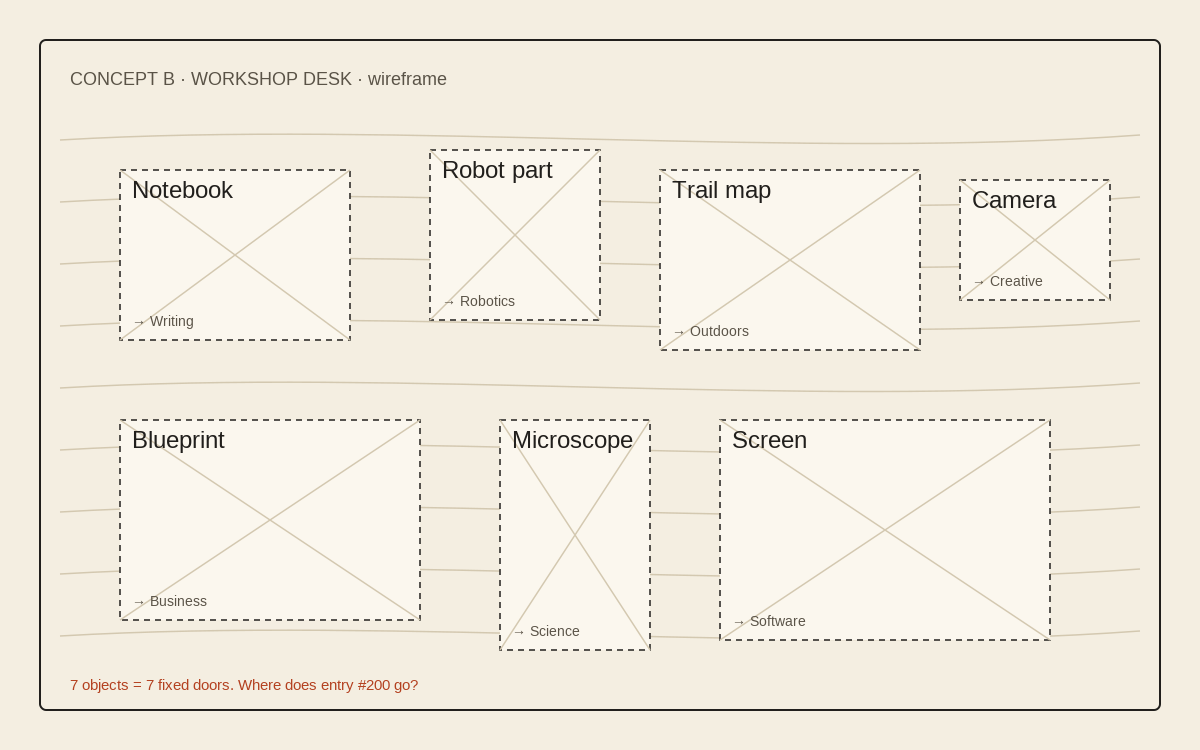
B · Workshop Desk. An illustrated workbench, where the notebook leads to essays, the microscope to science and the trail map to trips. It’s the warmest of the three on a first visit. On closer look it’s a category menu with drawings: seven objects are seven fixed doors, and entry No. 200 has nowhere to go.
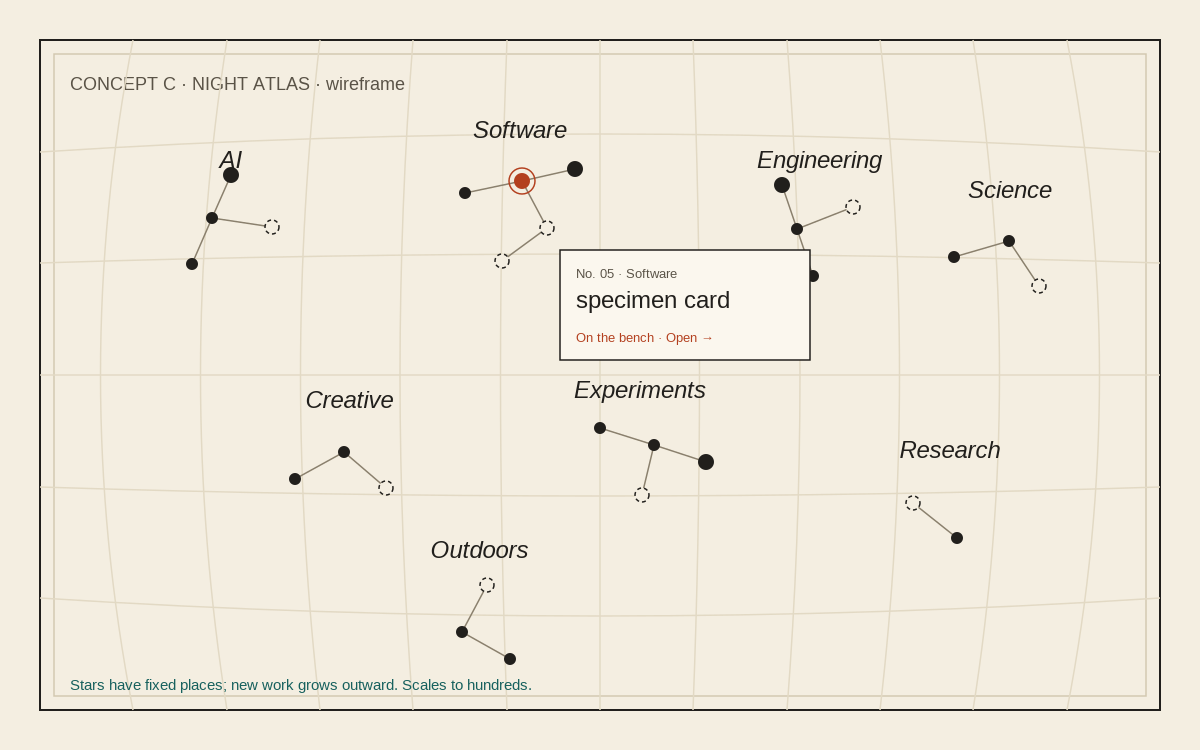
C · The Night Atlas. Concept A’s structure, Concept B’s sense of real objects, and the catalogue voice abbydavid.com already uses. Fields become constellations and entries become stars. Each star’s position is computed from its catalogue number, so it never moves.
Four looks
The visual direction had to fit beside abbydavid.com: warm paper, deep ink, teal links, coral bookmark ribbons, Newsreader for headings.
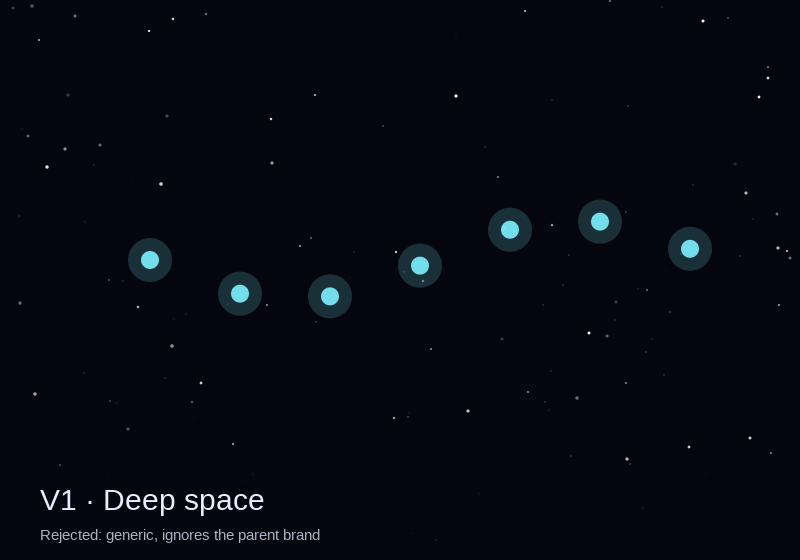
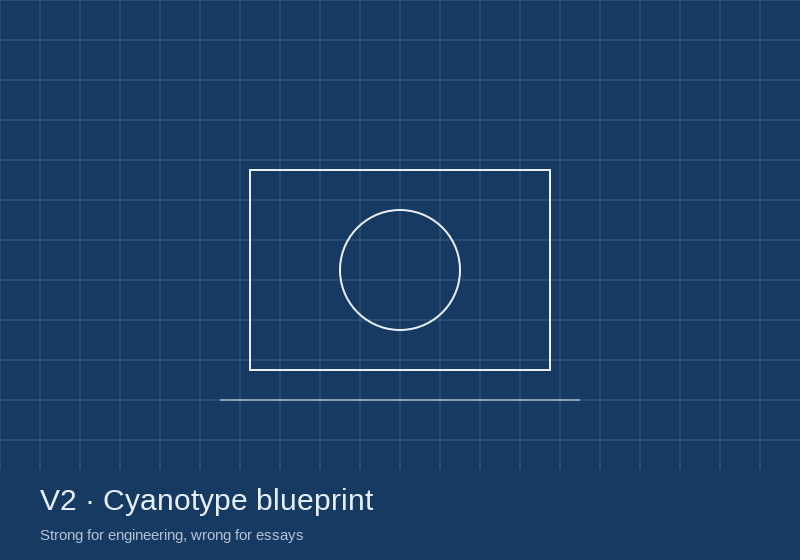
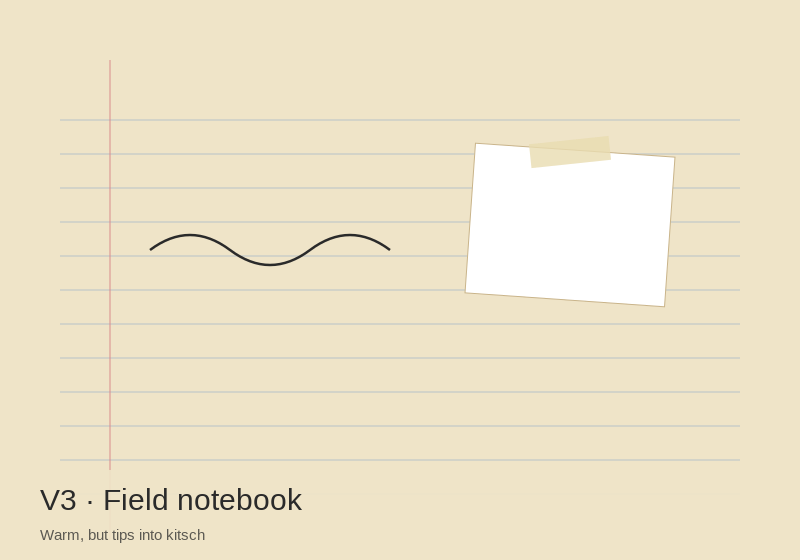
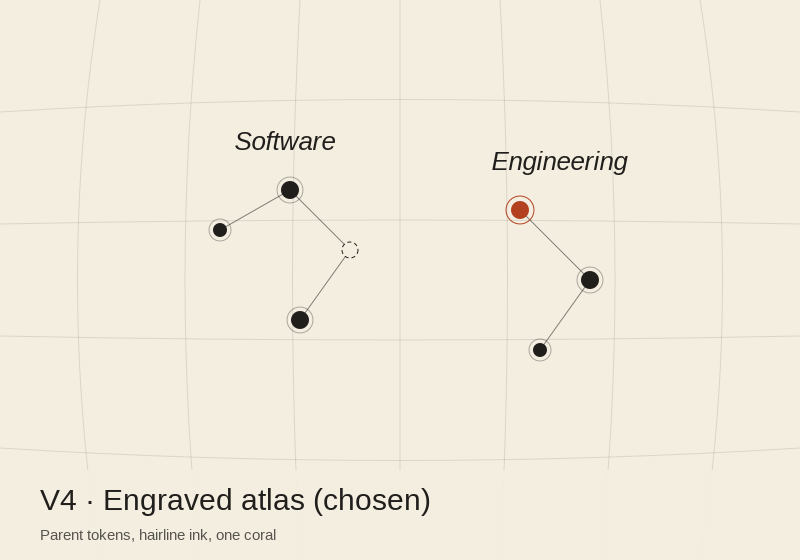
Four visual directions. V4 uses the parent site's tokens unchanged.
How a star finds its place
Each constellation lays its stars on a golden-angle spiral, in order of catalogue number. The first star sits near the centre and later ones spiral outward. Because the order never changes, nothing already on the chart moves when something new is added.
const GOLDEN = Math.PI * (3 - Math.sqrt(5)); // ≈ 137.5°

const pts = list.map((entry, i) => {
  const r = spacing * Math.sqrt(i + 0.35);   // equal area per star
  const θ = i * GOLDEN + rotation;          // each field has its own rotation…
  const x = Math.cos(θ) * r * stretch;      // …and stretch, so no two figures match
  const y = Math.sin(θ) * r;
  return rotate({ x, y }, tilt, centre);
});
The lines between stars are a minimum spanning tree: the shortest set of lines that joins every star in the field. That’s why each field reads as a constellation figure and the chart never turns into a hairball.
What the critic changed
Before any code, an independent reviewer pulled the proposal apart. Most of what it said was right.
- One pulse, not many. Only the most recently tended build animates. Everything else holds still.
- Phones get strips, not a pannable map. A chart you can drag inside a page you scroll is a scroll trap. On small screens the sky becomes a still picture, and each constellation gets its own strip below it.
- One tab stop. Keyboard users tab into the chart once, then move with the arrow keys.
[and]jump between constellations. - Plates, not noise. Entries without photographs show their own star highlighted in its constellation, rather than a generic generative pattern.
Build log
Research and three concepts
Looked at digital gardens, star atlases, workbench portfolios and museum collection explorers. Wrote up the Universe, the Desk and the Atlas.
Independent critique
The proposal went to a reviewer who hadn’t seen the work being made. Coordinates cut, mobile rethought, motion reduced.
First light
The atlas renders at build time as plain SVG with real links. Hover cards, zoom and keyboard navigation are added on top.
From the build log
The chart renders as plain SVG at build time, so every star is a real link before any JavaScript runs.
Threads from this star
Back to the atlas →No. 04 · Science · related
A free, offline-friendly quiz with a retro battle-screen look. Identify real organisms from iNaturalist photos and fill in your Field guide.
No. 01 · Outdoors · related
A fitness game for a group of friends. Log the miles you walk, hike, run or ride, and everyone moves together along the Appalachian Trail, Springer Mountain to Katahdin.